
guide book of united states coins
Coin collecting‚ a fascinating hobby‚ blossomed in the United States by the mid-20th century‚ building upon European traditions from centuries prior.
The hobby centers around acquiring and studying U.S. coins‚ with the first official coins appearing in 1793‚ marking over 230 years of numismatic history.
A guide book of united states coins‚ like the Red Book‚ provides essential coin values‚ historical context‚ and expert insights for both beginners and seasoned collectors.

A Brief History of U.S. Coins
United States coinage officially began in 1793‚ following the Coinage Act of 1792‚ though coins had been circulating since 1787. These early coins‚ primarily copper‚ silver‚ and gold‚ reflected the nation’s fledgling economy and aspirations.
The first official mint was established in Philadelphia‚ becoming the central hub for coin production for many years. Early American copper coins (1793-1857) represent a significant period‚ showcasing evolving designs and metal compositions. Throughout the 19th century‚ silver dollars – including iconic Morgan and Peace Dollars – became staples of commerce and collecting.
The 20th and 21st centuries witnessed the introduction of beloved series like Lincoln Cents (Wheat and Memorial)‚ Buffalo and Jefferson Nickels‚ and various dime‚ quarter‚ and half-dollar designs. A guide book of united states coins‚ such as the Red Book‚ meticulously documents these changes‚ providing collectors with a chronological understanding of U.S. coinage.
Coin collecting gained momentum in the 1950s‚ fueled by increased disposable income and a growing interest in history. Today‚ these coins serve as tangible links to the past‚ offering insights into American culture‚ economics‚ and artistry.

Why Collect U.S. Coins?
The allure of U.S. coin collecting stems from a diverse range of motivations. For many‚ it’s a captivating journey through American history‚ with each coin representing a specific era‚ event‚ or cultural shift. Coins are tangible artifacts‚ connecting collectors to the past in a unique and personal way.
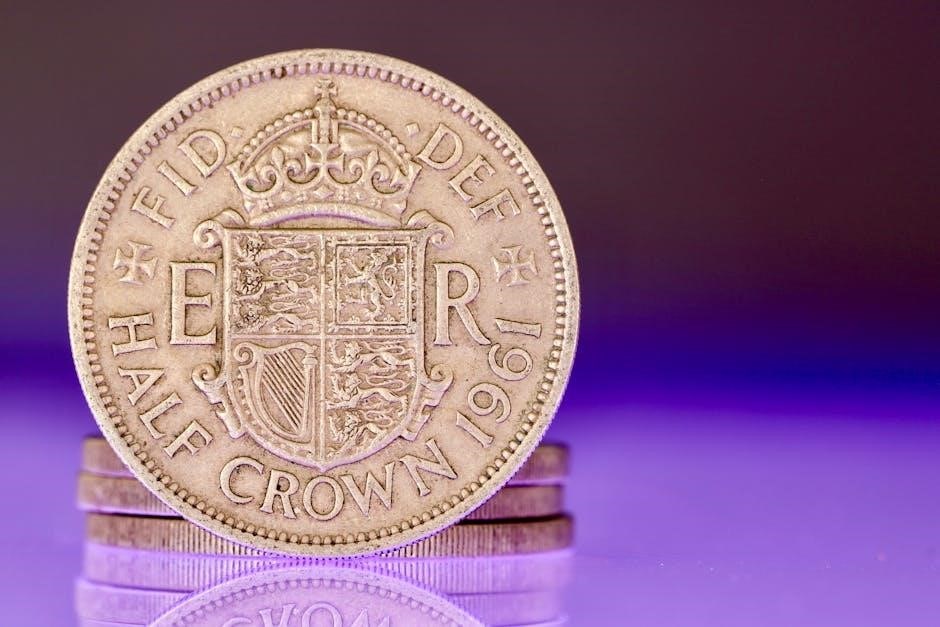
Beyond historical significance‚ coin collecting offers intellectual stimulation. Researching coin types‚ mint marks‚ and grading criteria fosters a deeper understanding of numismatics. A guide book of united states coins‚ like the Red Book‚ becomes an invaluable tool in this pursuit‚ providing detailed information and aiding in identification.
Furthermore‚ coin collecting can be a financially rewarding hobby. Rare and well-preserved coins can appreciate in value over time‚ offering potential investment opportunities. However‚ the primary appeal often lies in the joy of the hunt‚ the satisfaction of completing a set‚ and the camaraderie within the coin collecting community.
Ultimately‚ collecting U.S. coins is a rewarding pastime that combines history‚ knowledge‚ and the thrill of discovery.

Understanding Coin Values
Coin values are determined by a complex interplay of factors‚ detailed within a guide book of united states coins. These guides‚ like PCGS and NGC‚ offer market insights.
Accurate valuation requires understanding condition‚ rarity‚ and current market demand‚ all crucial elements for collectors and investors alike.
Factors Influencing Coin Value
Determining a coin’s value extends far beyond its face value‚ as detailed in any comprehensive guide book of united states coins. Several key factors significantly impact its worth within the numismatic market. Condition‚ arguably the most crucial element‚ is assessed using standardized grading scales‚ influencing price dramatically.
Rarity plays a pivotal role; coins with limited mintages or surviving examples command higher premiums. Demand‚ driven by collector interest and historical significance‚ also heavily influences value. Errors in the minting process‚ such as doubled dies or off-center strikes‚ can substantially increase a coin’s desirability.
Metal content‚ particularly for silver and gold coins‚ provides an intrinsic base value. Furthermore‚ historical context and provenance – a coin’s documented ownership history – can add to its appeal. Finally‚ market trends and economic conditions contribute to fluctuations in coin values‚ making ongoing research essential for collectors utilizing a guide book.
Utilizing Coin Price Guides (PCGS‚ NGC‚ Greysheet)
A reliable guide book of united states coins is invaluable‚ but supplementing it with current price guides like PCGS‚ NGC‚ and Greysheet is crucial for accurate valuations. These resources offer regularly updated market data‚ reflecting real-time buying and selling activity.
PCGS (Professional Coin Grading Service) and NGC (Numismatic Guaranty Corporation) provide price guides alongside their grading services‚ offering values based on certified coin conditions. Greysheet‚ a widely respected industry standard since 1963‚ delivers wholesale pricing information used by dealers.
Understanding these guides requires recognizing they present possible values‚ not guarantees; Actual sale prices depend on individual coin characteristics and market dynamics. Comparing data across multiple sources‚ and considering a coin’s specific grade‚ is essential. Utilizing these tools‚ alongside a foundational guide book‚ empowers collectors to make informed decisions and assess fair market value.
Key Coin Types and Series
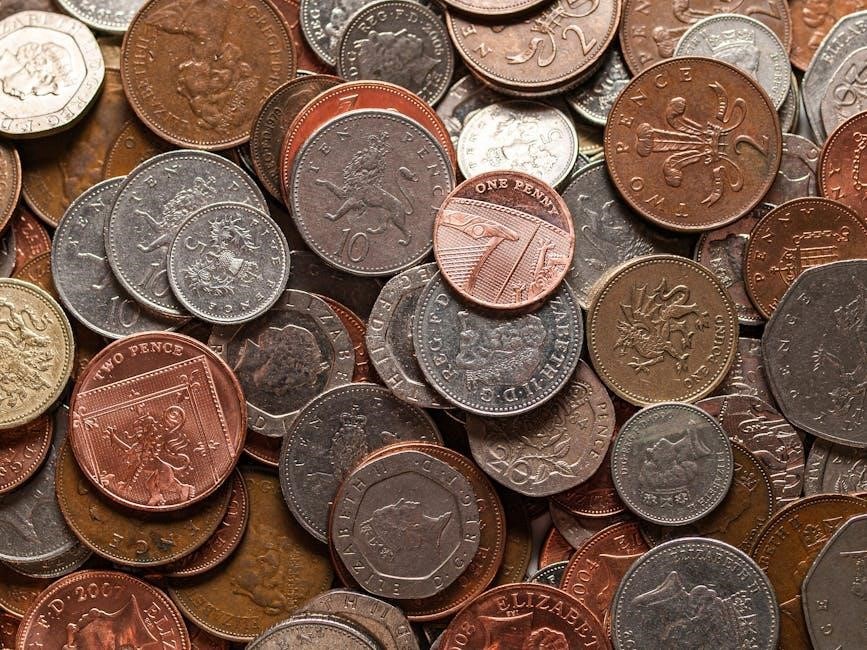
A comprehensive guide book of united states coins details iconic series like Early American Copper‚ Morgan & Peace Silver Dollars‚ and Lincoln Cents—Wheat and Memorial designs.
Buffalo and Jefferson Nickels‚ alongside Dimes‚ Quarters‚ and Half Dollars‚ represent significant collecting avenues for enthusiasts.

Early American Copper Coins (1793-1857)
Early American copper coins‚ spanning 1793-1857‚ represent a captivating yet complex area for collectors‚ thoroughly detailed within a comprehensive guide book of united states coins. These coins‚ including Large Cents and Half Cents‚ were among the first officially produced by the U.S. Mint‚ offering a tangible link to the nation’s formative years.
The Large Cent underwent several design variations – Chain Cent‚ Wreath Cent‚ Caplet Cent‚ and Classic Head Cent – each presenting unique collecting challenges and opportunities. A guide book assists in identifying these subtle differences and understanding their impact on value. Condition is paramount; even seemingly common dates can command significant premiums in higher grades.
Variations in die states‚ repunched dates‚ and other mint errors add another layer of intrigue. The guide book provides detailed listings of these varieties‚ enabling collectors to accurately identify and assess their holdings. Understanding the historical context – the economic conditions and technological limitations of the era – enhances the appreciation for these early copper issues. These coins are not merely metal; they are historical artifacts.
Silver Dollars: Morgan and Peace Dollars
Morgan and Peace Dollars stand as iconic symbols of American silver coinage‚ extensively cataloged within any detailed guide book of united states coins. The Morgan Dollar (1878-1904‚ 1921) owes its popularity to its large size‚ striking design‚ and association with the silver boom of the late 19th century. A guide book is crucial for navigating the numerous mint marks and dates‚ as some combinations are exceptionally rare.
The Peace Dollar (1921-1928‚ 1934-1935) commemorates the end of World War I‚ featuring a design symbolizing peace and prosperity. Collectors often pursue complete date and mint mark sets of both series‚ a challenging but rewarding endeavor. A guide book provides accurate pricing based on grade‚ with Mint State examples commanding substantial premiums.
Understanding factors like luster‚ strike quality‚ and bag marks – detailed in a good guide book – is essential for accurate grading. These dollars represent not only numismatic value but also a tangible connection to significant historical events‚ making them highly sought-after collectibles.
Lincoln Cents: Wheat and Memorial

Lincoln Cents‚ encompassing both the Wheat and Memorial designs‚ represent an accessible entry point into U.S. coin collecting‚ thoroughly covered in any comprehensive guide book of united states coins. The Wheat cent (1909-1958) is beloved for its classic design and historical significance‚ being the first regular circulating U.S. coin to feature a real person.
A guide book is invaluable for identifying key dates and varieties‚ such as the 1909-S VDB‚ which commands a significant premium. The Memorial cent (1959-present) replaced the Wheat design‚ featuring the Lincoln Memorial on its reverse. While generally more common‚ certain dates and errors within the Memorial series also hold collector value.
A guide book details grading standards‚ helping collectors assess condition and determine value. Full steps on the reverse of Wheat cents are a desirable feature‚ increasing their worth. Both series offer affordable collecting opportunities‚ making them popular among beginners and experienced numismatists alike.
Buffalo Nickels and Jefferson Nickels
Buffalo Nickels (1913-1938) and Jefferson Nickels (1938-present) offer a captivating journey through American coinage‚ extensively detailed within any reliable guide book of united states coins. The Buffalo Nickel‚ with its iconic Native American and bison designs‚ is a favorite among collectors due to its artistic merit and historical representation.
A guide book assists in identifying key dates and varieties‚ like the 1913-S Type 2‚ a highly sought-after rarity. The Jefferson Nickel replaced the Buffalo‚ showcasing Thomas Jefferson and Monticello. While generally more common‚ certain Jefferson Nickel dates‚ particularly those from the war years with silver content‚ are valuable.
Understanding the coin grading scale‚ as explained in a guide book‚ is crucial for assessing condition and value. Full steps below Monticello on Jefferson Nickels are a desirable characteristic. Both series provide affordable collecting options‚ appealing to both novice and seasoned numismatists.
Dimes‚ Quarters‚ and Half Dollars: A Comprehensive Overview
Dimes‚ Quarters‚ and Half Dollars represent a significant portion of U.S. coinage history‚ thoroughly documented in any comprehensive guide book of united states coins. The Mercury Dime (1916-1945) and Roosevelt Dime (1946-present) showcase evolving designs and metal compositions. A guide book details key dates and mint marks‚ impacting collectibility.
Quarters have featured diverse designs‚ from the Washington Quarter (1932-1998) to the State Quarter program (1999-2008) and America the Beautiful Quarters (2010-2021). Half Dollars‚ including the Walking Liberty and Franklin designs‚ offer larger silver content opportunities for collectors.
A guide book is essential for understanding variations like doubled dies and proof strikes. Assessing coin values requires knowledge of condition‚ using the Sheldon scale‚ as explained within the resource. These denominations provide a broad spectrum of collecting possibilities‚ from affordable circulation strikes to rare key dates.
Coin Grading: Assessing Condition
A guide book of united states coins explains the Sheldon scale‚ a standard for determining a coin’s value based on its condition and wear.
Understanding terms like Mint State and About Uncirculated is crucial for accurate assessment.
The Sheldon Coin Grading Scale
The Sheldon Coin Grading Scale‚ developed by Dr. William Herbert Sheldon in the 1950s‚ revolutionized how U.S. coins are assessed and valued. A guide book of united states coins will detail this system‚ explaining its 70-point scale‚ where 1 represents a completely ungradable coin and 70 signifies a perfect specimen.
Initially‚ the scale focused on large cents‚ but it quickly became the industry standard for all U.S. coin types. The scale isn’t merely about age; it’s a comparative assessment of wear‚ luster‚ and surface preservation. Coins are categorized into broad grades – Poor‚ Fair‚ Good‚ Very Good‚ Fine‚ Very Fine‚ Extremely Fine‚ About Uncirculated‚ and Mint State – each with numerical subdivisions.
A guide book emphasizes that grading is subjective‚ requiring experience and a keen eye. Factors like bag marks‚ scratches‚ and alterations impact the grade. Understanding the Sheldon scale‚ as presented in numismatic resources‚ is fundamental for collectors aiming to accurately determine the worth of their coins and participate confidently in the market.
Understanding Coin Grading Terms (Mint State‚ About Uncirculated‚ etc.)
A comprehensive guide book of united states coins is crucial for deciphering the terminology used in coin grading. “Mint State” (MS) denotes a coin that has never been circulated‚ retaining its original luster and sharp details. Grades within Mint State‚ like MS60 to MS70‚ reflect the degree of imperfections.
“About Uncirculated” (AU) signifies minimal wear‚ typically on high points‚ but still possessing significant original luster. “Extremely Fine” (EF or XF) shows moderate wear‚ with details remaining sharp‚ while “Very Fine” (VF) exhibits more noticeable wear but retains major design elements.
Lower grades‚ such as “Good” (G) and “Fair” (F)‚ indicate significant wear‚ often with details worn smooth. A guide book clarifies that these terms aren’t absolute; subjective judgment is involved. Understanding these terms‚ and how they relate to the Sheldon scale‚ empowers collectors to assess a coin’s condition and accurately determine its value within the numismatic market.

Resources for Collectors
Coin enthusiasts benefit from resources like the official Red Book‚ a trusted guide book of united states coins‚ offering coin values and history.
Online communities and forums provide platforms for sharing knowledge and connecting with fellow collectors‚ enhancing the hobby’s enjoyment.
The Red Book: A Standard Reference
The Red Book‚ officially known as A Guide Book of United States Coins‚ stands as the cornerstone reference for American numismatists. First published in 1946‚ it has become an indispensable tool for collectors of all levels‚ from beginners to experts.
This annually updated volume meticulously catalogs U.S. coins‚ providing detailed information on each type and variety. Crucially‚ The Red Book offers estimated retail values for coins in various conditions‚ serving as a vital pricing guide. However‚ it’s important to remember these are estimates‚ and actual market values can fluctuate.
Beyond pricing‚ The Red Book delves into the history of each coin‚ covering its design origins‚ mintage figures‚ and notable characteristics. It includes high-quality photographs to aid in identification and features helpful grading information. For anyone serious about collecting U.S. coins‚ The Red Book is an essential investment‚ offering a wealth of knowledge in a single‚ comprehensive volume. It truly is a guide book of united states coins.
Online Coin Communities and Forums
While a guide book of united states coins like the Red Book provides a solid foundation‚ the digital age offers a wealth of supplementary resources for collectors. Online coin communities and forums serve as vibrant hubs for enthusiasts to connect‚ share knowledge‚ and discuss all aspects of numismatics.
These platforms allow collectors to ask questions‚ receive expert advice‚ showcase their collections‚ and participate in lively debates about coin values and rarities. Many forums feature dedicated sections for specific coin types or series‚ fostering focused discussions. They are invaluable for staying current on market trends and learning from experienced collectors.
Furthermore‚ online communities often host virtual auctions and trading opportunities. However‚ caution is advised when engaging in online transactions; always verify the seller’s reputation and utilize secure payment methods. Supplementing traditional resources with these digital spaces enhances the collecting experience and provides access to a global network of fellow enthusiasts.